Go To Books

 Shop by schools



This item is currently Out of Stock
Check Delivery
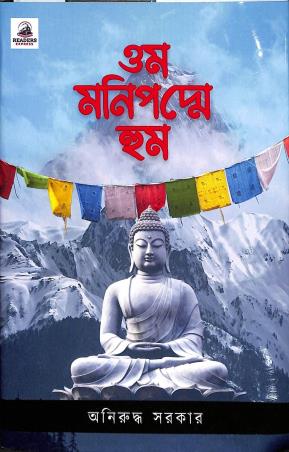
When the primordial sound of creation?'O' or 'Om'?is deconstructed, it yields the syllables 'A-U-M.' Here, 'A' represents Vishnu, 'U' signifies Maheshwara (or Shiva), and 'M' denotes Brahma (or the Creator). It is the primal sound underlying all mantras. The syllable 'Om' constitutes the foundational element of the sonic structure of the *Samaveda*. Journalist Aniruddha Sarkar has delved into the history of how the terms *Mani Padme* and *Hum* subsequently became integrated with it. Following the *Mahaparinirvana* of the Buddha, Buddhism underwent a schism, giving rise to the Mahayana and Hinayana sects. Much later, the Vajrayana tradition emerged. The mantra of the Vajrayana Tantric Buddhists of Bengal is "Om Mani Padme Hum." How did this mantra reach Tibet, and how did Atisha Dipankara become associated with it? What is the connection between this mantra and the Vikramshila Mahavihara? Furthermore, why is this very mantra inscribed upon Buddhist prayer flags? Journalist and researcher Aniruddha Sarkar has sought the answers to these and many other such questions.
| Author | Aniruddha Sarkar |
| Publisher | Readers Express |
| Language | Bengali |
| Binding Type | Hardcover |
| Non Fiction | Religion & Spirituality |
| Indian Author | Yes |
| ISBN13 | 9789349742024 |
| SKU | BK 0219523 |
A handpicked list of products which has touched millions

Fast Shipping On All Orders

30 Day Money Back

Technical Support 24/7

All Cards Accepted
© Copyright 2022 | KOKBooks.com All Rights Reserved.

 Books
Books